
I’ve cooked in fine dining kitchens where a single plate cost more than most people’s weekly grocery budget, and I’ve cooked on a coffee truck where I did math in my head to figure out if I could afford both propane and lunch. I’ve been the broke cook. Not the aesthetic, hashtag, “look-at-my-artfully-lit-lentils” version — the actual version, where your bank account and your fridge are both staring back at you with nothing to say.
So let’s skip the part where I tell you frugality is an “empowering lifestyle” and get to the part where I tell you what actually works, because I’ve done both ends of this — cooked for people with unlimited budgets and cooked for myself with none — and the tools that keep you fed are the same ones professional kitchens have used forever. They’re just usually dressed up as “peasant food” when a restaurant does it and “sad” when you do it at home. That’s marketing, not truth.
Your pantry is not a punishment. It’s a toolkit.
Dried beans and lentils get treated like the consolation prize of cooking. They’re not. A bag of lentils costs next to nothing, keeps for a year, and turns into dal, soup, a bean salad, or the base of a chili depending on what mood you’re in and what’s wilting in your crisper drawer. One cup of dried beans becomes about three cups cooked. That’s not a fun fact, that’s math that keeps you fed for three days instead of one.
Same goes for rice, pasta, canned tomatoes, and a decent bottle of oil. These aren’t “backup” ingredients. They’re the actual foundation every cook — broke or Michelin-starred — builds a meal on top of. The fancy version and the broke version use the same starting point. The difference is what you know how to do with it.
One pot. That’s the whole trick.
Professional kitchens run on efficiency, not magic. One-pot cooking isn’t a budget hack, it’s just good technique — everything simmers together, the flavours actually talk to each other, and you’re not standing over four burners like it’s a juggling act. Rice and beans one night, a vegetable stew the next, and you’ve done a week’s worth of dinners with one pot and a cutting board.
Leftovers aren’t sad. They’re prep you already did.
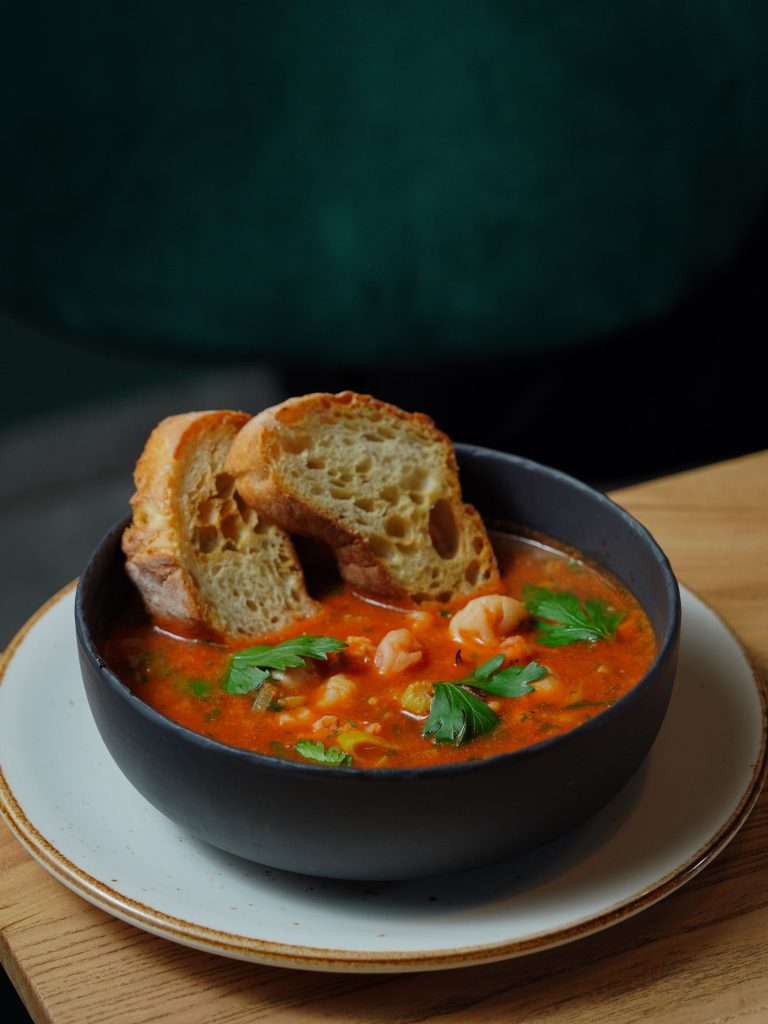
This is the one that professional kitchens understand better than anyone: nothing gets wasted, because waste is money walking out the back door. That half-eaten roast chicken isn’t a guilt trip in your fridge — it’s the head start on tomorrow’s soup, fried rice, or sandwich filling. Stale bread isn’t garbage, it’s croutons or bread pudding. If you’re throwing food away because it feels “done,” you’re throwing away a meal you already half-cooked.
Buy the ugly, buy the bulk, buy the season.
Marked-down produce that’s a day from its prime isn’t a compromise — it’s a discount on flavour you’re going to cook out of it anyway. Buy beans, rice, and pasta in bulk when you can, because price-per-meal drops fast. And cook with what’s in season, because it’s cheaper, it tastes better, and it hasn’t traveled halfway across a continent to sit in your cart.
Spices are the cheapest flex you own.
A jar of cumin, a jar of smoked paprika, decent black pepper, some dried oregano — this is a five-ingredient toolkit that turns “beans and rice, again” into something you actually want to eat. Spices are inexpensive per use and they last. This is the actual gap between a bland broke-cook meal and a good one, and it costs about the same either way.
The real skill is confidence, not a bigger budget
Everything above is technique any professional cook uses regardless of what’s in the till — batch cooking, using the whole ingredient, building flavour with what’s cheap and shelf-stable, not wasting anything. The only thing that changes when you’re skint is that you can’t paper over bad technique with expensive ingredients. You actually have to know what you’re doing.
That’s exactly what I built The Broke Cook’s Survival Manual to hand you — not the “isn’t poverty quirky” pep talk, but the actual kitchen logic: what to stock, what to batch, how to plan a week of meals off a handful of staples, and how to stretch what’s already in your fridge instead of pretending it’s trash. Twelve chapters, real technique, zero pretending that beans are a personality.
Being broke isn’t new, isn’t black, and isn’t a vibe. It’s just Tuesday. Let’s eat anyway.